PRODUCTS CENTER

Palestine DIN975 thread rod, B7 thread rod, high-strength screw rod
Category:
Product Description
B7 fully threaded studs are one of our main products. They are high-strength alloy steel fully threaded fasteners that meet ASTM A193 standards. They are designed for high-temperature and high-pressure environments and are widely used in key areas such as pipeline flanges, valve connections in the oil and natural gas industry, chemical reactors, pressure vessels, power plant boilers, turbines, and shipbuilding high-temperature piping systems. B7 fully threaded studs are an ideal choice for high-temperature and high-pressure industrial applications, combining high strength, heat resistance, and installation flexibility.
1. Core features of B7 fully threaded studs:
1). High strength
Tensile strength ≥689 MPa, hardness HRC 26-32, achieved through quenching and tempering heat treatment.
2). Fully threaded design
Full-length threads provide even stress distribution and facilitate adjustment and installation.
3). High temperature and high pressure resistance
Suitable for extreme environments such as boilers, pressure vessels, and temperature ranges from -29°C to +425°C.
2. Difference between B7 fully threaded studs and ordinary studs
B7 fully threaded studs mainly use alloy steel, with a strength ≥689 MPa and high-temperature strength between -29°C and 425°C. Compared to ordinary studs made of low-carbon steel with a strength of around 400 MPa and high-temperature strength between -20°C and 250°C, B7 studs are more suitable for critical industrial applications.
3. How to choose the length of B7 studs?
The length should be calculated based on flange thickness + gasket + nut thickness + reserved threads (2-3 threads).
Surface treatment: Blackening/Phosphating/Zinc plating
Standard: ASTM A193 B7
5. Can B7 studs replace B16 studs?
A: No. B16 is made of chromium molybdenum steel, with higher temperature resistance (up to 650°C), and is used in more demanding environments.
6. Is anti-corrosion coating available?
A: Zinc plating or DACROMET can be provided, but the application must be specified (use with caution in high-temperature environments).
| Reference for corresponding standard data | |
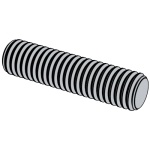
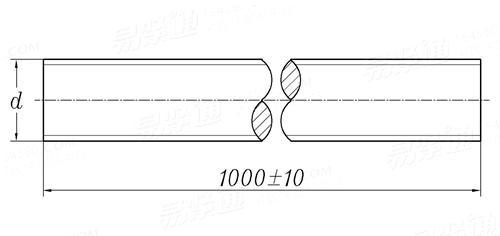
| DIN 975-1986 Stud Bolt Threaded Rods |
|
|
Unit: millimeters (mm) |
| Thread Size d |
M2 | M2.5 | M3 | (M3.5) | M4 | M5 | M6 | M8 | M10 | |
| P | Coarse Thread Fine Thread Fine Thread |
0.4 | 0.45 | 0.5 | 0.6 | 0.7 | 0.8 | 1 | 1.25 | 1.5 |
| / | / | / | / | / | / | / | 1 | 1.25 | ||
| / | / | / | / | / | / | / | / | 1 | ||
| L | ±10 | 1000 | 1000 | 1000 | 1000 | 1000 | 1000 | 1000 | 1000 | 1000 |
| Weight per thousand pieces (steel) = kg | 18.7 | 30 | 44 | 60 | 78 | 124 | 177 | 319 | 500 | |
| Thread Size d |
M12 | (M14) | M16 | (M18) | M20 | (M22) | M24 | (M27) | M30 | |
| P | Coarse Thread | 1.75 | 2 | 2 | 2.5 | 2.5 | 2.5 | 3 | 3 | 3.5 |
| Fine Thread | 1.25 | 1.5 | 1.5 | 1.5 | 1.5 | 1.5 | 2 | 2 | 2 | |
| Fine Thread | 1.5 | / | / | / | / | / | / | / | / | |
| L | ±10 | 1000 | 1000 | 1000 | 1000 | 1000 | 1000 | 1000 | 1000 | 1000 |
| Weight per thousand pieces (steel) ≈ kg | 725 | 970 | 1330 | 1650 | 2080 | 2540 | 3000 | 3850 | 4750 | |
| Thread Size d |
(M33) | M36 | (M39) | M42 | (M45) | M48 | (M52) | |
| P | Coarse Thread Fine Thread |
3.5 | 4 | 4 | 4.5 | 4.5 | 5 | 5 |
| 2 | 3 | 3 | 3 | 3 | 3 | 3 | ||
| Fine Thread | / | 1 | / | / | / | / | / | |
| L | ±10 | 1000 | 1000 | 1000 | 1000 | 1000 | 1000 | 1000 |
| Weight per thousand pieces (steel) = kg | 5900 | 6900 | 8200 | 9400 | 11000 | 12400 | 14700 | |
①, Material:
a) Steel, property class: 4.6, 5.6, 5.8. Standard ISO 898-1
Note: If no specific model is specified, it should be determined by the manufacturer.
b) Stainless steel, property class: A2, A4. Standard DIN 267-11
c) Non-ferrous metal, property class: CuZn = copper zinc alloy, CU2 or CU3 to be selected by the manufacturer. Standard DIN 267-18